

Media
Freedom of Religion, Sabarimala Review & Judiciary Behaving like Clergy
25 March, 2026


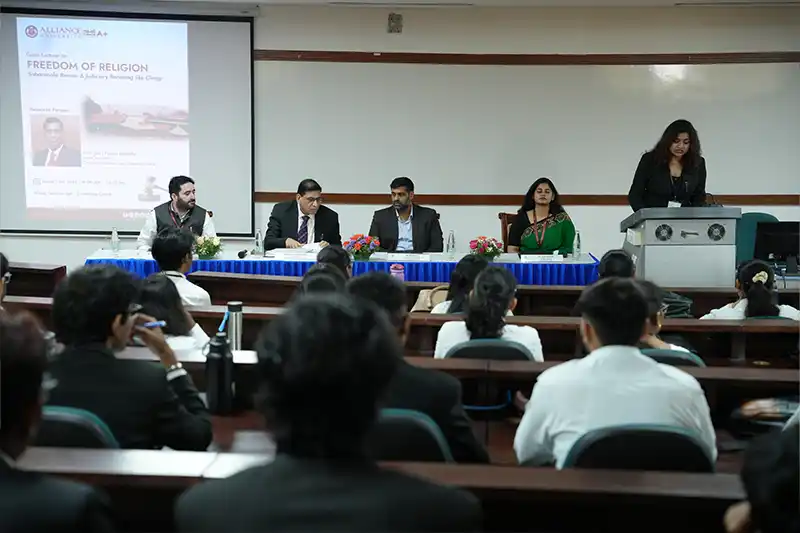
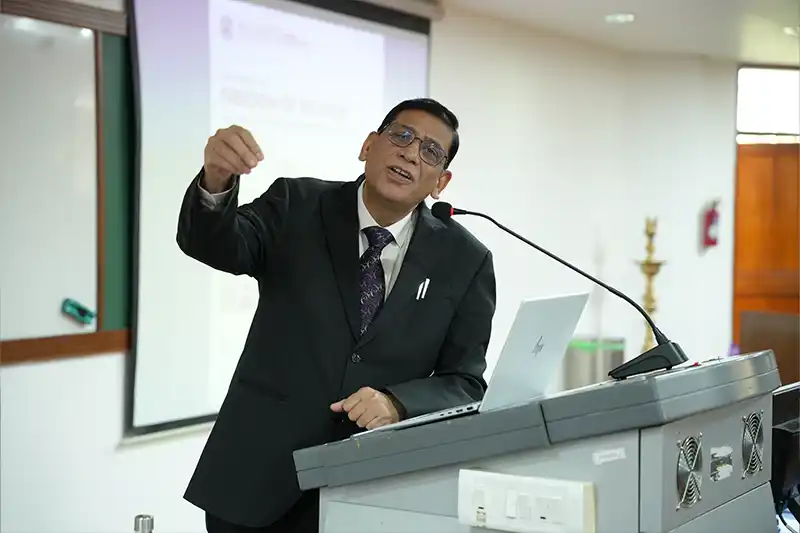
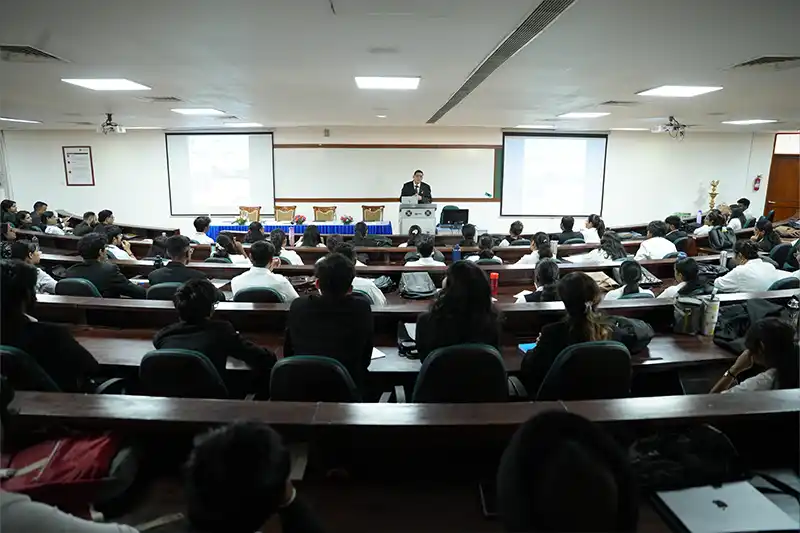
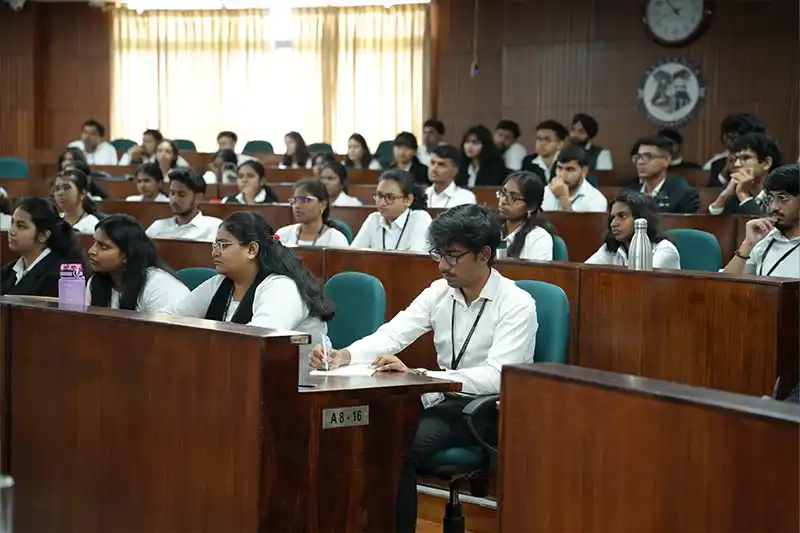
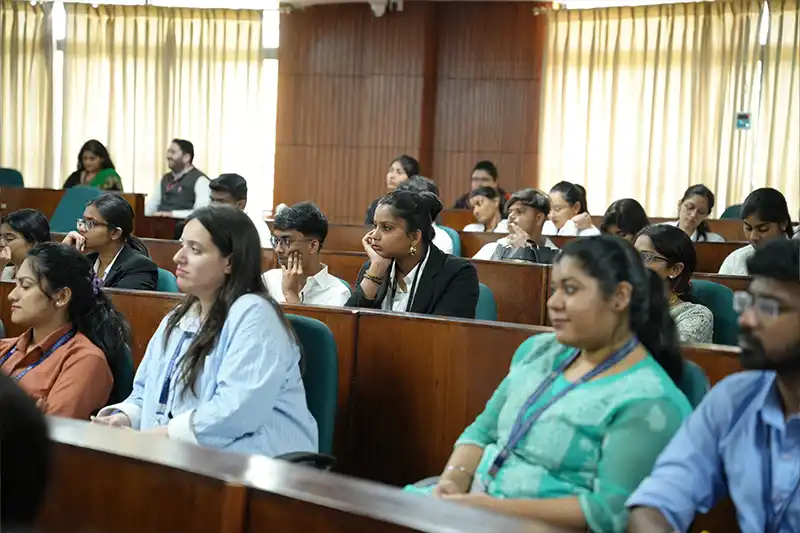
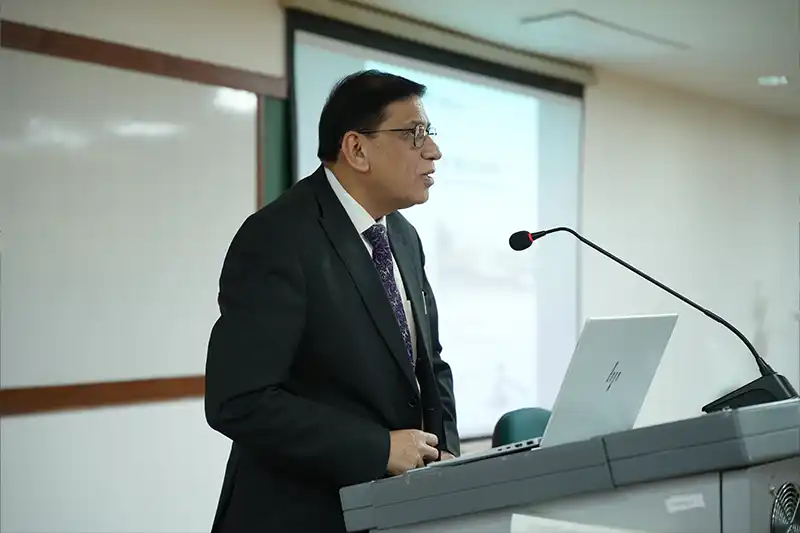
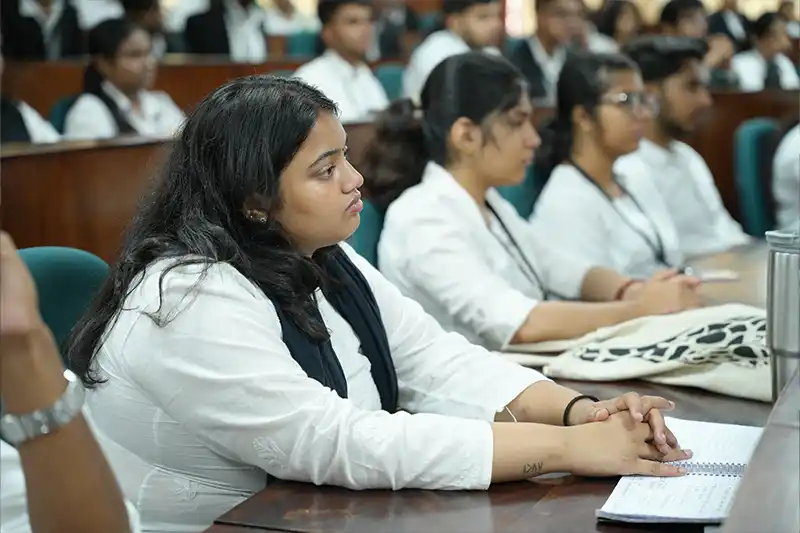
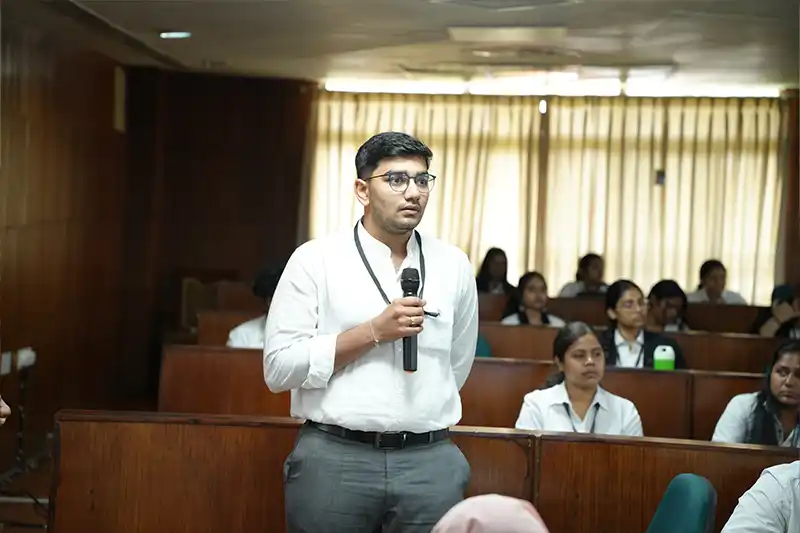
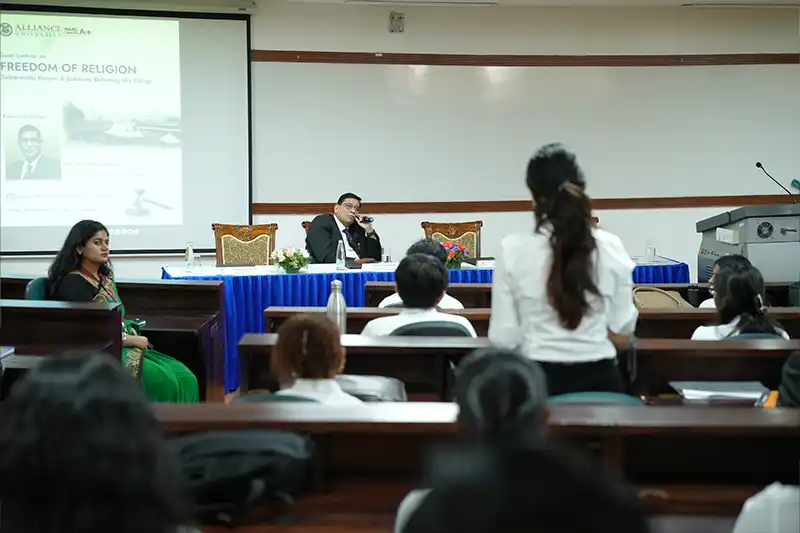
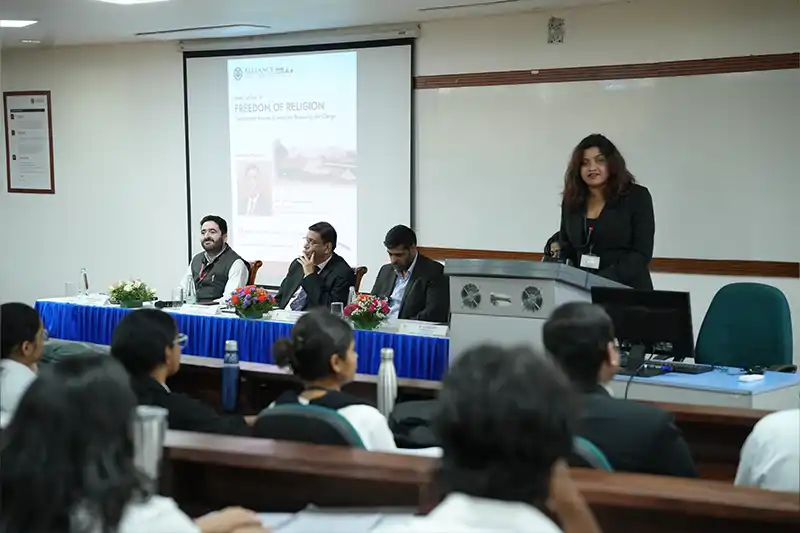
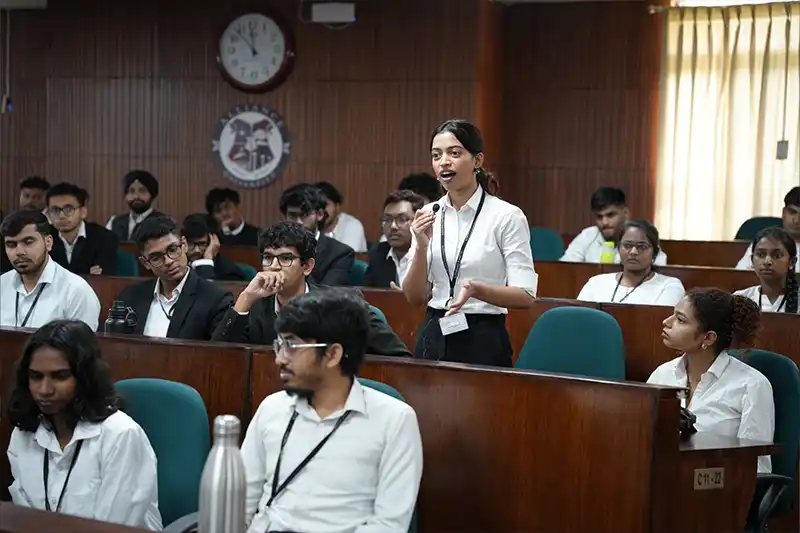
Alliance School of Law at Alliance University organised a guest lecture on the theme “Freedom of Religion: Sabarimala Review & Judiciary Behaving like Clergy.” The session brought together students to engage with important constitutional questions related to religion, law, and the role of the judiciary in India. The lecture aimed to provide a deeper understanding of how legal principles interact with religious practices in a modern constitutional framework.
The session was delivered by Prof. (Dr.) Faizan Mustafa, Vice-Chancellor of Chanakya National Law University, Patna. He began by explaining that India is a society where religion continues to play a significant role in both personal and social life. At the same time, he highlighted that the Constitution adopts a secular framework that places individual rights, equality, and dignity above religious practices. He noted that the framers of the Constitution chose not to invoke God in the Preamble, reflecting their commitment to constitutional values and a scientific approach to governance.
The lecture examined the scope of freedom of religion under Articles 25 to 28, explaining that these rights are not absolute and are subject to considerations such as public order, morality, health, and other fundamental rights. Prof. Mustafa discussed the “essential religious practices” doctrine developed by the courts and raised concerns about its application. He observed that when courts attempt to determine what is essential to a religion, judges may be placed in the position of interpreting theology. Instead, he suggested that courts should focus on whether a practice aligns with constitutional values such as equality, gender justice, and human dignity.
While discussing the Sabarimala issue, the lecture highlighted the balance between denominational rights under Article 26 and individual rights under Article 25. The discussion reflected on whether exclusionary practices can continue within a constitutional system that upholds equality. It also emphasised that judicial intervention in religious matters should remain within the scope of constitutional scrutiny rather than extend into doctrinal interpretation.
The session further explored key principles that guide freedom of religion in India, including equality, neutrality, and liberty. It was noted that the state must treat all religions equally, maintain a balanced distance from religious affairs, and protect the individual’s right to belief and practice. The lecture concluded by reinforcing that constitutional morality must be upheld alongside respect for diversity, ensuring that freedom of religion exists in harmony with dignity, social reform, and inclusivity.
The session concluded with an interactive discussion, where students engaged with the themes of constitutional secularism, judicial review, and the relationship between faith and fundamental rights. The lecture provided a thoughtful academic platform for students to reflect on the evolving nature of law and society.
