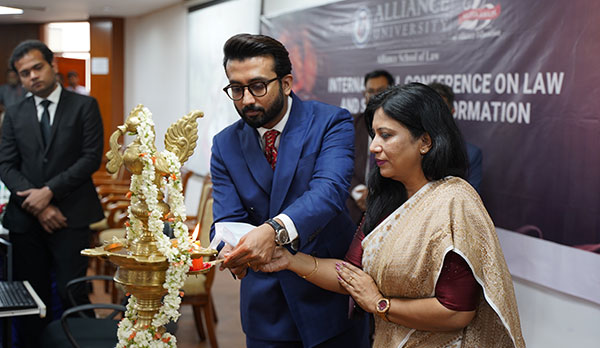
The 5th International Conference on Law and Social Transformation (ICLS 2026) provides an international platform for academicians, researchers, judges, arbitrators, mediators, legal practitioners, policymakers, industry experts, corporate professionals, and research scholars to exchange ideas and present original research on contemporary developments in Alternative Dispute Resolution (ADR).
The conference explores the transformative role of arbitration, mediation, conciliation, negotiation, Online Dispute Resolution (ODR), artificial intelligence, investment arbitration, ESG governance, technology-enabled justice systems, and cross-border dispute resolution in advancing sustainable development and strengthening access to justice.
By fostering interdisciplinary collaboration among academia, government, industry, and the legal profession, ICLS 2026 aims to promote innovative scholarship and practical solutions that contribute to peaceful, efficient, and sustainable dispute resolution worldwide.
The Conference features eight interdisciplinary tracks covering Alternative Dispute Resolution, Sustainable Development, Technology, Corporate Governance, Human Rights, Climate Justice, International Arbitration, and Emerging Areas of Law.
Explore all Conference TracksAlliance University is a private university established in Karnataka by the State Act No. 34 of year 2010. The University is recognized by the University Grants Commission, New Delhi and is accredited with a NAAC A+ Grade. The University has a vibrant and picturesque campus in Bengaluru, one of the fastest-growing cities in India. It offers undergraduate and postgraduate majors across divergent streams of knowledge such as psychology and data science, technology and law, physics and philosophy, businesses and rhetoric. In addition, it fosters transdisciplinary approaches and nurtures a dynamic foundation for the spirit of collaboration, inquiry, and enterprise. Alliance Education, defined by excellence in the areas of Business Administration, Engineering, Legal studies, etc., and guided by the core values of the University, has shaped the lives of over 32,000+ very successful alumni across the globe.
Alliance School of Law, Alliance University is approved by the Bar Council of India (BCI), New Delhi. The School has been ranked 20th among all law schools in India by National Institutional Ranking Framework (NIRF) 2025. The Alliance School of Law offers two five-year, integrated undergraduate courses in law, viz., Bachelor of Arts, Bachelor of Law Honors - B.A. LL. B. (Hons.) and Bachelor of Business Administration, Bachelor of Law Honors - B.B.A LL. B. (Hons.), as well as 3-years LL. B. course that has been carefully crafted and designed to prepare its graduates for rewarding careers in various roles and responsibilities in legal service organizations.
Alliance School of Law also offers a full-time, one-year Master of Law (LL. M.) degree with specializations in IT and Data Protection Law, Corporate Law, Law Climate Change and Sustainability, Trade and Commercial Laws, Crime and Forensics Law, Human Rights Law, and Intellectual Property Law, to develop strong research expertise among the postgraduate students and also offer a Ph.D. programme in law and policy studies.
The Law School has established various centres for advanced legal studies and research, to facilitate engagements with various sections of society for deliberations over a variety of socio-legal issues through initiatives such as Conferences, Seminars, Workshops, Books, Journals, Blogs, etc.
Bringing together academicians, researchers, judges, arbitrators, mediators, legal practitioners, policymakers, corporate professionals, and scholars from around the world.
Exploring the transformative role of Alternative Dispute Resolution in advancing access to justice, institutional effectiveness, and the Sustainable Development Goals (SDGs).
Encouraging scholarship across Law, Artificial Intelligence, Public Policy, Management, Business, Economics, Technology, Sociology, Psychology, Environmental Studies, International Relations, Data Governance, and allied disciplines.
Insights from eminent jurists, ADR experts, policymakers, academics, and industry leaders.
Opportunities to engage with researchers, practitioners, institutions, and professionals from diverse jurisdictions.
Selected papers will be considered for publication in the conference proceedings published by the reputed international publisher, subject to successful peer review, editorial acceptance, and the publisher's policies.
Every eligible manuscript is evaluated by independent experts to ensure academic quality, fairness, and research integrity.
Best Paper and Best Presentation Awards for outstanding scholarly contributions, subject to the Conference Awards Policy.
Participate in expert-led workshops, including the #PublishWise: Advanced Legal Research and Writing Workshop and live Mock Mediation and Arbitration Sessions.
Certificate of Presentation, Certificate of Conference Attendance, and Workshop Completion (where applicable), for eligible registered participants.
The Conference is organised around eight thematic tracks designed to encourage interdisciplinary dialogue on Alternative Dispute Resolution, Law and Sustainable Development.
The Conference also welcomes original interdisciplinary, comparative, policy-oriented, and practice-based research that aligns with the overall Conference theme, including innovative and emerging areas extending beyond the illustrative topics listed under the Conference tracks.
For detailed thematic areas and submission guidelines, please refer to the Call for Papers.
Conference Governance provides the institutional, administrative, and academic framework for the effective planning, management, and delivery of the conference. It ensures that the conference is organised in accordance with the highest standards of professionalism, transparency, academic excellence, and research integrity.
The Conference Governance structure comprises the Chief Patron, Patron(s), Advisor(s), and Conference Chair, who provide strategic leadership and overall direction to the conference. It further encompasses two principal bodies: the Organising Committee, which is responsible for the planning, administration, logistics, finance, publicity, and operational management of the conference; and the Scientific Committee, which provides strategic academic oversight of the conference programme, publication process, and peer-review system.
Pro-Chancellor
Alliance University
Vice-Chancellor
Alliance University
Professor and Associate Dean,
Academic Affairs and Dean,
Alliance School of Law,
Alliance University
Associate Professor,
Alliance University
Assistant Professor,
Alliance University
The Scientific Committee is the principal academic body responsible for maintaining the scholarly quality, integrity, and academic standards of the conference. It provides strategic oversight of the conference's scientific programme, publication process, and peer-review system, ensuring that all accepted papers meet the highest standards of academic excellence, research integrity, and publication ethics. The Scientific Committee comprises two constituent bodies: the Editorial Committee, which oversees the editorial management of the conference proceedings, and the International Review Board, which conducts independent double-blind peer review of submitted manuscripts.
Note: The speaker lineup is being finalised. Additional speakers and the Chief Guest will be announced shortly.
The Organising Committee cordially invites the submission of original, unpublished, and high-quality research papers that advance the theory, policy, and practice of Alternative Dispute Resolution (ADR) and its interdisciplinary dimensions.
The Conference welcomes submissions from academicians, researchers, judges, arbitrators, mediators, legal practitioners, policymakers, corporate professionals, industry experts, doctoral scholars, postgraduate students, and other stakeholders engaged in dispute resolution and justice systems. Interdisciplinary research integrating perspectives from Law, Management, Public Policy, Artificial Intelligence, Technology, Economics, Sociology, Psychology, Business, International Relations, Environmental Studies, Data Governance, and other allied disciplines is particularly encouraged.
Authors are invited to submit innovative theoretical, empirical, doctrinal, comparative, and practice-oriented research papers that contribute to the development of efficient, inclusive, and sustainable dispute resolution mechanisms. The Conference seeks to foster meaningful academic dialogue on the evolving role of ADR in promoting access to justice, strengthening institutional frameworks, and advancing the Sustainable Development Goals (SDGs). Original interdisciplinary, comparative, policy-oriented, and practice-based research, including manuscripts addressing emerging and niche areas that complement the Conference tracks, is particularly encouraged. The thematic sub-topics listed under each conference track are illustrative rather than exhaustive.
Selected papers, subject to the successful completion of the editorial and peer-review process and compliance with the publication guidelines, will be eligible for consideration for publication in the conference proceedings, in accordance with the publisher's editorial policies and final acceptance criteria.
ICLS 2026 accepts full-length original manuscripts under the following categories:
Full Research Papers
Case Studies
Policy Papers
Doctoral Research Papers
Interdisciplinary Research Papers
Only complete manuscripts will be considered for publication.
Authors are required to submit an abstract during the initial stage of the review process for consideration by the Scientific Committee.
Abstracts shortlisted through the preliminary evaluation will be invited to submit a full manuscript in accordance with the conference guidelines.
Submission of the full manuscript is mandatory for conference presentation and further consideration for publication in the conference proceedings.
Authors whose abstracts are accepted but who fail to submit the complete manuscript by the prescribed deadline will not be included in the conference programme, and their submissions will not be considered for presentation or publication.
Only full manuscripts that successfully complete the conference review process, are presented at the conference, and satisfy all editorial, ethical, and formatting requirements will be eligible for consideration for publication in the conference proceedings.
The Microsoft CMT service was used for managing the peer-reviewing process for this conference. This service was provided for free by Microsoft and they bore all expenses, including costs for Azure cloud services as well as for software development and support.
| Milestone | Date | Purpose |
|---|---|---|
| Call for Papers Opens | July 8, 2026 | Launch of conference website and Microsoft CMT submission portal. |
| Abstract Submission Deadline | July 31, 2026 | Submission of 300–350 word abstracts. |
| Abstract Acceptance Notification | August 10, 2026 | Invitation to submit full manuscripts. |
| Full Manuscript Submission Deadline | September 15, 2026 | Submission of anonymized full manuscripts. |
| Finalisation of Peer Review | October 18, 2026 | Completion of the double-blind peer-review process |
| Conference Schedule Release | October 20, 2026 | Conference Schedule Release |
| Conference Dates | October 26–28, 2026 | Paper presentations and academic discussions. |
| Submission of Revised Manuscripts | November 10, 2026 | Authors incorporate reviewer and conference feedback. |
| Final Editorial Decision for Proceedings | November 20, 2026 | Final acceptance for publication in the proceedings. |
| Camera-Ready Submission | November 30, 2026 | Submission of publication-ready manuscripts. |
| Publisher Editorial Processing, Production and Tentative Proceedings Publication | December 2026 – January 2027 | Editorial processing, production, and quality checks. |
Note: The Conference follows a rolling review process. Plagiarism screening, technical checks, editorial assessment, and peer review will commence immediately upon submission of abstracts and full manuscripts, without waiting for the respective submission deadlines. Early submissions are therefore strongly encouraged.
Peer Review and Publication Ethics Statement:
The 5th International Conference on Law
and Social Transformation (ICLS 2026) is committed to a fair, independent, and
rigorous peer review process adhering to the principles of the Committee on
Publication Ethics (COPE) and the applicable editorial and publication policies of
the designated conference proceedings publisher. Editorial decisions are based solely
on scholarly merit, originality, and ethical compliance; registration fees,
institutional affiliations, or non-academic considerations do not influence
publication outcomes. All editors and reviewers maintain strict confidentiality and
must disclose any potential conflicts of interest.
ICLS 2026 operates on a rolling review model. Plagiarism screening, editorial screening, and double-blind peer reviews commence immediately upon receipt of submissions. Authors are strongly encouraged to submit early to facilitate timely review cycles and communications without waiting for final deadlines.
All submissions will be screened using Turnitin or equivalent plagiarism detection software. As a general guideline, manuscripts should have an overall similarity index of not more than 10%, excluding the bibliography/references, quoted material, and matches comprising fewer than 14 consecutive words. Similarity arising from properly cited legal provisions, case names, statutory extracts, commonly used legal terminology, or standard publication statements may be disregarded where appropriate.
The overall similarity index shall not be the sole criterion for editorial evaluation. The Scientific Committee reserves the right to assess the nature, source, and context of the matched content and to reject any manuscript containing plagiarism, duplicate publication, self-plagiarism, or other forms of academic misconduct, irrespective of the overall similarity percentage.
Authors must ensure that all work submitted is original and accurate. While we acknowledge the utility of AI in academic writing, its use must strictly adhere to the following guidelines:
To recognise outstanding scholarly contributions and presentation excellence, the Conference will confer the following awards:
Presented to the paper demonstrating exceptional originality, scholarly contribution, methodological rigour, analytical quality, and relevance to the Conference theme, based on the combined assessment of the peer-review process and the evaluation of the Scientific Committee.
Presented to two participants who demonstrate exceptional presentation skills, subject knowledge, clarity of communication, engagement with the audience, and effective responses to questions during the technical sessions.
300–350 words including:
4–6 keywords. Provide keywords capturing the main ideas of your manuscript. Keywords are mandatory. Separate the keywords with a comma (“,”)
Manuscript Length: 6,000–8,000 words (including abstract, references, tables, figures, and appendices)
Use the template as provided. In particular:
Use a spell-checker and proof-read your manuscript before submitting:
Check that the manuscript title is in upper lower case, following APA Style:
Authors must strictly use the official manuscript template. Authors must download and utilize the template provided on the conference website. Submissions that do not comply with the required formatting standards, font styles, and citation structures may be returned to the authors or rejected during the initial screening process.
Only original and unpublished manuscripts will be accepted.
Authors must remove names, affiliations, acknowledgements, and identifying metadata before submission.
Abstract and full manuscript submissions will be managed through Microsoft CMT.
Microsoft CMT Submission Process:
Authors are strongly encouraged to use their official institutional or organisational email address for conference registration, manuscript submission, and all related correspondence. To facilitate accurate author identification, publication metadata, and indexing requirements, all authors whose manuscripts are accepted for publication may be required to provide a valid ORCID iD in accordance with the publisher's submission requirements.
| Category | Early Bird 11 Aug – 25 Sep 2026 | Regular 26 Sep – 18 Oct 2026 |
|---|---|---|
| Indian Delegates | INR 6,000 | INR 7,500 |
| International Delegates | USD 100 | USD 150 |
| LDC Delegates* | USD 65 | USD 80 |
| Audience Only (Indian)† | INR 1,500 | |
| Audience Only (International)† | USD 25 | |
* LDC: Least Developed Countries, as classified by the United Nations.
Note:
† Audience Only: This category does not include paper presentation or consideration for publication. Participants will receive only a Certificate of Conference Attendance.
| Category | Publication Charges (Open Access) |
|---|---|
| Per Paper | INR 13,000 ($140) |
| Category | Rate (Per Day Per Person) |
|---|---|
| Indian Participants | INR 1,500 |
| International Participants | USD 15 |
Note: Accommodation charges are optional and separate from the conference registration fee. Rooms will be allotted on a first-come, first-served basis upon confirmation of booking and payment. Details regarding room occupancy, check-in/check-out timings, applicable taxes (if any), and available facilities will be communicated after confirmation.
The Accompanying Person category is exclusively for individuals accompanying a registered conference participant and covers only approved hospitality and accommodation arrangements, subject to availability and separate payment.
Registration under this category does not include access to the conference venue, academic sessions, networking events, workshops, mock ADR sessions, paper presentations, exhibition areas, conference meals, refreshments, conference kit, certificates, or publication.
Note: Accompanying persons may access only those University areas specifically designated by the Organising Committee. Any additional hospitality services or meal arrangements shall be subject to availability and applicable charges.
The Conference will be conducted in a hybrid mode, offering both in-person and virtual participation.
The Conference has been designed as an immersive academic experience featuring expert-led Mock Mediation and Arbitration Sessions, the #PublishWise Workshop on Advanced Legal Research and Writing, keynote and plenary addresses, networking opportunities, and interactions with leading academicians, practitioners, and policymakers. The Organising Committee strongly encourages all Indian participants to attend the Conference on campus at Alliance University.
International participants are also encouraged to attend the Conference in person. However, due to travel, visa, or logistical constraints, they may opt for virtual participation upon prior intimation to the Organising Committee.
The Organising Committee reserves the right to determine the mode of participation in exceptional cases and make suitable arrangements for the effective conduct of the Conference.
Note: Any applicable payment gateway charges, bank transaction charges, currency conversion charges, or other processing fees shall be borne by the participant and are in addition to the applicable registration, publication, or accommodation fee.
Registration: Registration fees are non-transferable and non-refundable.
• Authorship: A manuscript may have a maximum of three (3) authors. At least one author must complete the conference registration and present the original manuscript. Each individual may be associated with only one manuscript, either as a sole author or co-author, irrespective of institutional affiliation. Multiple submissions by the same individual under different affiliations will not be permitted. Where multiple submissions are identified, the Organising Committee reserves the right to accept only one manuscript at its discretion and reject the remaining submissions.
Publication Charges : Publication charges are governed by the Registration and Logistics section.
Registered delegates will receive a conference kit. Registration includes access to all technical sessions, keynote and plenary addresses, expert-led workshops, and mock ADR sessions, together with daily refreshments, breakfast, and lunch during the conference. Participants will also receive the applicable certificates, including a Workshop Participation Certificate, Certificate of Presentation (for paper presenters), and Certificate of Conference Attendance (for non-presenting delegates). Accompanying persons are not covered under the standard registration package and must register separately for hospitality arrangements.
⚠️ “Virtual participants will receive electronic certificates and access to the virtual conference sessions. Upon request, the conference kit may be couriered to the registered address at the participant's expense, subject to payment of the applicable courier and handling charges.”
Participants are fully responsible for their own travel, accommodation, and local arrangements. The Organising Committee does not provide travel grants, airfare reimbursement, visa fee reimbursement, or any other financial assistance.
On-campus accommodation – Accommodation charges are not included in the conference registration fee.
Limited on-campus accommodation may be available upon prior request and payment, subject to availability and allocated on a first-come, first-served basis.
If on-campus is unavailable, we will provide a list of nearby hotels and lodging options.
Where on-campus accommodation is unavailable, participants will be provided with information regarding nearby hotels and other lodging options. All reservations and related expenses shall be the responsibility of the participant.
International participants requiring a visa are advised to consult the nearest Indian Embassy or Consulate, or the official Government of India visa portal, well in advance of their intended travel.
Upon request, the Conference Secretariat will issue an official invitation letter to registered participants solely for the purpose of supporting their visa application.
The issuance of an invitation letter does not guarantee visa approval, which remains entirely at the discretion of the competent immigration authorities.