Overview

Modelling, Simulation & Innovation

The Centre focuses on advanced computational research and innovation using MATLAB and Simulink, enabling cutting edge development in wireless technologies, electrical systems, intelligent systems, and data driven applications across engineering, industry, and society.

Vision

To empower students, faculty, and researchers across all disciplines with the cutting-edge modelling and simulation environment from MathWorks, fostering a culture of innovation, analytical thinking, and interdisciplinary collaboration through the strategic integration of MATLAB in teaching, learning, and research—towards societal progress and sustainable development.

Mission

  • To establish a sustainable framework for embedding MATLAB across diverse academic programs, ensuring continuous innovation in experiential learning and practical application.
  • To create an institutional ecosystem that empowers educators to adopt MATLAB-driven teaching methodologies, fostering advanced analytical thinking and technology-enabled learning for future-ready graduates.
  • To build a collaborative ecosystem that connects academia with industry and fosters research excellence by leveraging MATLAB for simulation, modelling, and data analysis across diverse domains.
Objectives

Our Strategic Objectives

To embed MATLAB into the curriculum to foster hands-on and problem-solving learning experiences.

To empower faculty with tools and training for MATLAB-enabled teaching innovation.

To equip students with industry-relevant skills through hands-on MATLAB projects.

To augment interdisciplinary research and academia-industry collaboration using MATLAB.

Research Thrust Areas
  • Electrical Systems and Electric Mobility
  • Signal Processing and Intelligent Systems
  • Next Generation Wireless Systems
  • Aerospace & Automotive
  • Control Systems and Robotics
  • Image, Video, and Computer Vision
  • Simulation, Modelling & Physical Systems
Team Members

The Minds Behind the Centre

Dr. S Solaman Bobby

Professor

Alliance School of Applied Engineering

Infrastructure, Facilities & Resources
Computing Infrastructure

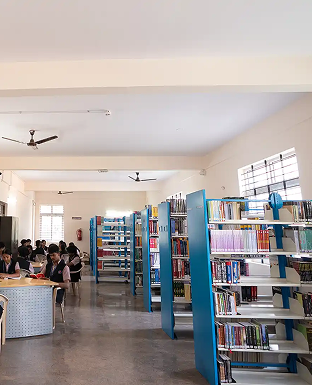
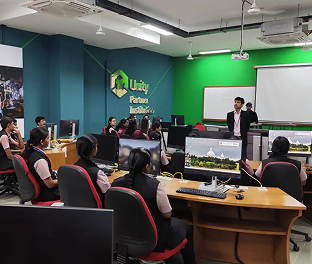
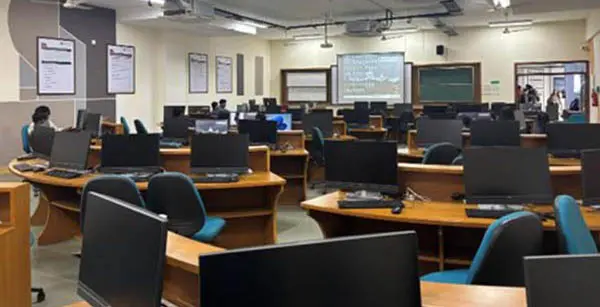
60 high performance PCs (Intel Core i7) with MATLAB and Simulink pre installed, supporting advanced computation, simulation, modelling, and AI workflows.

Major MATLAB Toolboxes Available

  • Signal Processing Toolbox
  • Communications Toolbox (including LTE and 5G toolboxes)
  • Control System Toolbox
  • Deep Learning Toolbox
  • Image Processing Toolbox
  • Simulink
  • Simscape Electrical
  • Aerospace Toolbox
Interdisciplinary Scope (if applicable)

Where disciplines unite, innovation takes flight

The Centre adopts an interdisciplinary approach by integrating expertise from robotics and autonomous systems, aerospace engineering, electric vehicle and powertrain technologies, computer science, and advanced signal processing, enabling holistic research outcomes and cross domain innovation.
Research Team Incharge

Dr. Prabhat Thakur

Associate Professor

ASAE/ECE
mathworks
Activities

Student Development

  • 2-Day Workshop on Electric Vehicle Development using Model-Based Design
    9-10 December 2025
  • 2-Day Workshop on Development of Wireless Communication Systems using MATLAB and Simulink
    17-18 December 2025

Faculty Development

  • Faculty Development Session on “Applications of MATLAB in Teaching”
    9 August 2025
  • Faculty Development Session on “Teaching with MATLAB & MATLAB Grader”
    22 December 2025
  • Faculty Development Program on “Modelling and Control of EVs using Simulink and Simscape”
    2-4 March 2026
  • Faculty Development Program on “Fundamentals of Machine Learning and Deep Learning using MATLAB”
    5-7 March 2026
  • Faculty Development Program on “MATLAB and its Applications in Management and Business Analytics”
    17-19 June 2026
Gallery

In Focus

Research Outcomes

Publications

[1] S. Banerjee, "Classifying power system disturbances with DFA and 1-NN: a robust machine learning approach," Engineering Research Express, vol. 8, no. 2, Jan. 2026, doi: 10.1088/2631-8695/ae345c.

[2] K. Sit, A. K. Pradhan, S. Dalai, and B. Chatterjee, "Estimating levels of surface contamination of silicone rubber insulators by employing wavelet decomposition and machine learning-based techniques," in Green Technology and Industry 4.0 for Sustainable Future, Open Source Preview, 2026.

[3] D. Mukharjee, K. Sit, A. Hazra, and T. Maity, "Enhancing economic power delivery: A squirrel search algorithm approach addressing realistic power system constraints," in 2025 IEEE 1st International Conference on Smart and Sustainable Developments in Electrical Engineering (SSDEE), 2025.

[4] A. K. Das, S. Barua, S. Deb, K. Sit, and S. Dalai, "Infrared thermal image aided deep transfer learning approach to sense contamination grade for non-contact monitoring of overhead line insulator," in 5th IEEE International Conference on Sustainable Energy and Future Electric Transportation (SeFeT), 2025.

[5] K. Sit, S. V. M., H. Varshita, K. Prashansa, J. Jewels, and K. S. Nikhil, "A hybrid deep learning architecture for phishing URL detection: Integrating LSTM and CNN for enhanced cybersecurity," in RAM-2026 International Conference, Bangkok, Thailand, 2026.

[6] I. Rai and C. Suchetha, "Microgrid and grid synchronization: A critical analysis of challenges and opportunities," Electric Power Systems Research, 2025.

[7] R. N. Ashwini and I. Rai, "Interleaving of symmetrical parallel bidirectional flyback converter design for DC microgrid applications," in International Conference on Electrical, Electronics, and Computer Science with Advance Power Technologies—A Future Trends (ICE2CPT), 2025.

[8] N. A. Kumar, D. Madhusudan, I. Ioannou, G. S. P. Ghantasala, and V. Vassiliou, "A self-supervised hybrid CNN with uncertainty-aware referral for diabetic retinopathy screening," Biomedical Signal Processing and Control, vol. 116, 2026, Art. no. 109482, doi: 10.1016/j.bspc.2026.109482.

[9] N. A. Kumar, T. Srinadh, I. Ioannou, G. P. Ghantasala, P. Vidyullatha, and V. Vassiliou, "Revolutionizing diabetic maculopathy detection with MobileNet, GAN-enhanced imaging, and Graph Neural Networks: A multimodal AI approach for precision ophthalmology," Informatics in Medicine Unlocked, vol. 58, Sep. 2025, Art. no. 101687.

[10] N. A. Kumar, R. B. K. Reddy, G. S. Satapathi, G. S. P. Ghantasala, R. V. Shet, and V. Nisanth, "Feature-driven dry eye diagnosis: Leveraging image processing and optimized techniques for clinical grading," in Proc. 2025 Int. Conf. Computing Technologies (ICOCT), 2025, pp. 1–6.

[11] A. Gautam, P. Thakur, and G. Singh, “Performance analysis of CA Polar code for 5G IoT low power wide area networks,” Internet Technology Letters, vol. 9, No. 2, Feb. 2026.

[12] Gautam, P. Thakur, and G. Singh, “Symbol-level GRAND assisted detection for polar coded spatial modulation in MIMO systems,” International Journal of Communication Systems, vol. 39, no. 7, Mar. 2026.

[13] G. Kumar, U. K. Rajput, and R. K. Saini, "Comparison between multi-scale decomposition and spatial frequency-based methods for the integration of panchromatic and multispectral pictures," Multidimensional Systems and Signal Processing, 2026, doi: 10.1007/s11045-025-00901-0.

[14] G. Kumar, "Adaptive Quasi bang-bang Controller for Structural Health Monitoring," in Proc. IEEE Int. Conf. on Signal Processing, Computing and Control (ISPCC), 2025, doi: 10.1109/ISPCC66872.2025.11039434.


Gallery

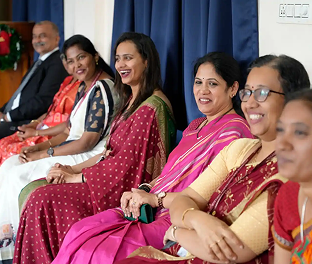
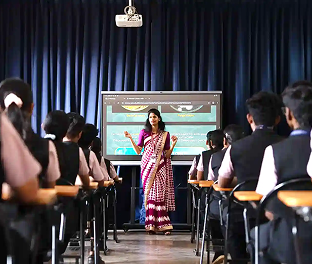
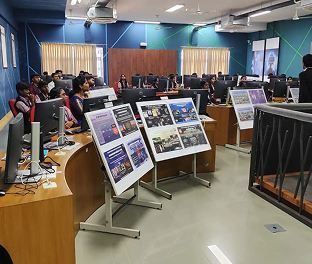
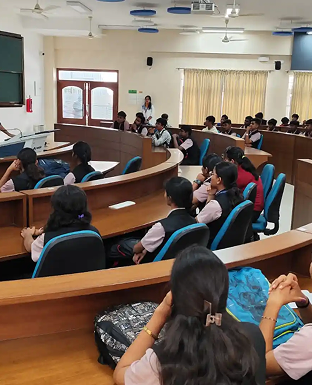
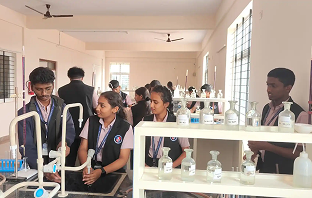
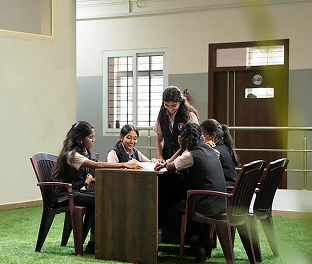
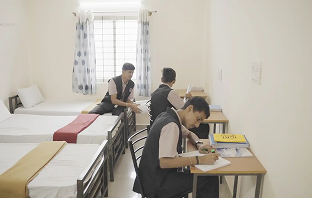
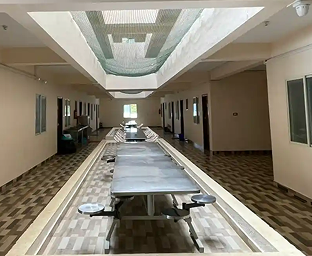
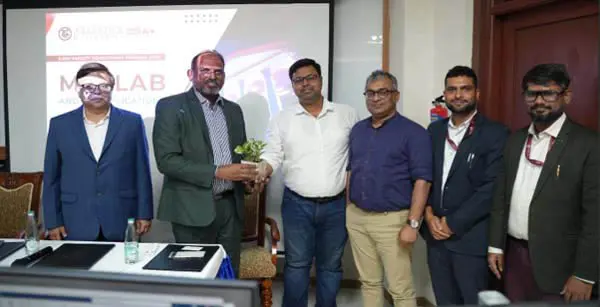
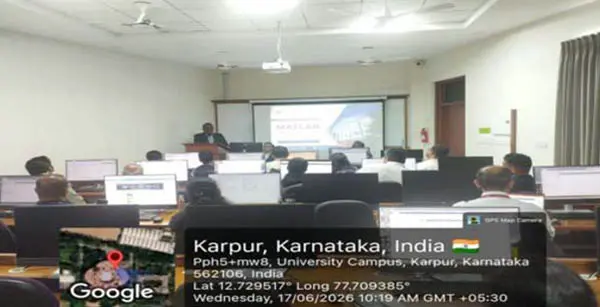
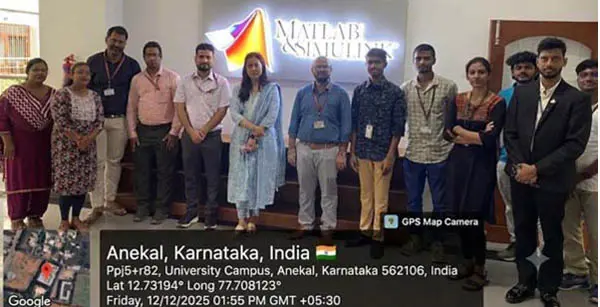
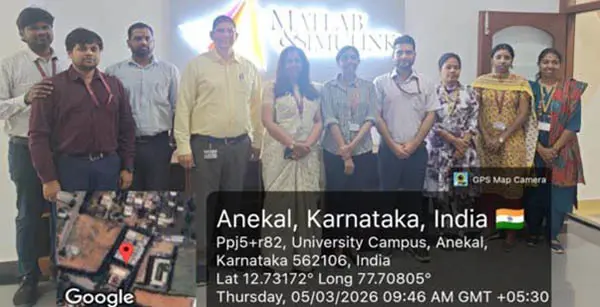
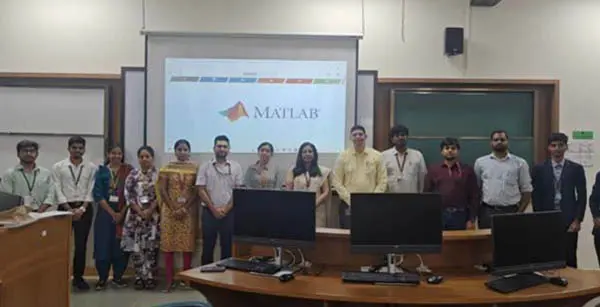
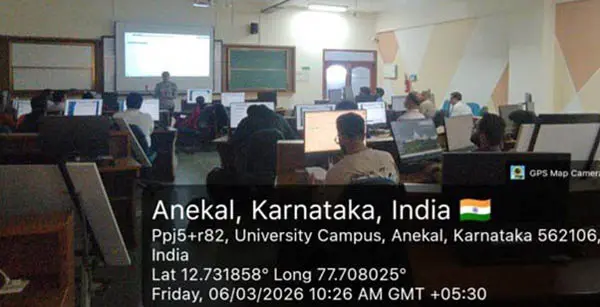
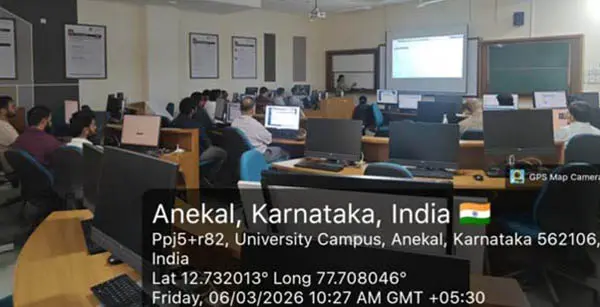
Glimpses of activities and events at the Centre of Excellence in MathWorks DeepTech Labs

↑
Enquiry Form
×

Enquire Now