| Course Type | Course Name | Credits |
|---|---|---|
| University Core | Research and Publication Ethics | 2 |
| University Core | Learning and Development | 1 |
| University Core | Academic Writing | 1 |
| Department Core | Research Methodology | 4 |
| Department Core | Technical Seminar | 3 |
| Department Core | Indian Literary Traditions as Indigenous Knowledge Systems | 3 |
| Department Core | Indic Knowledge Systems: Philosophy, Culture, and Science | 3 |
| Total Credits | 17 |

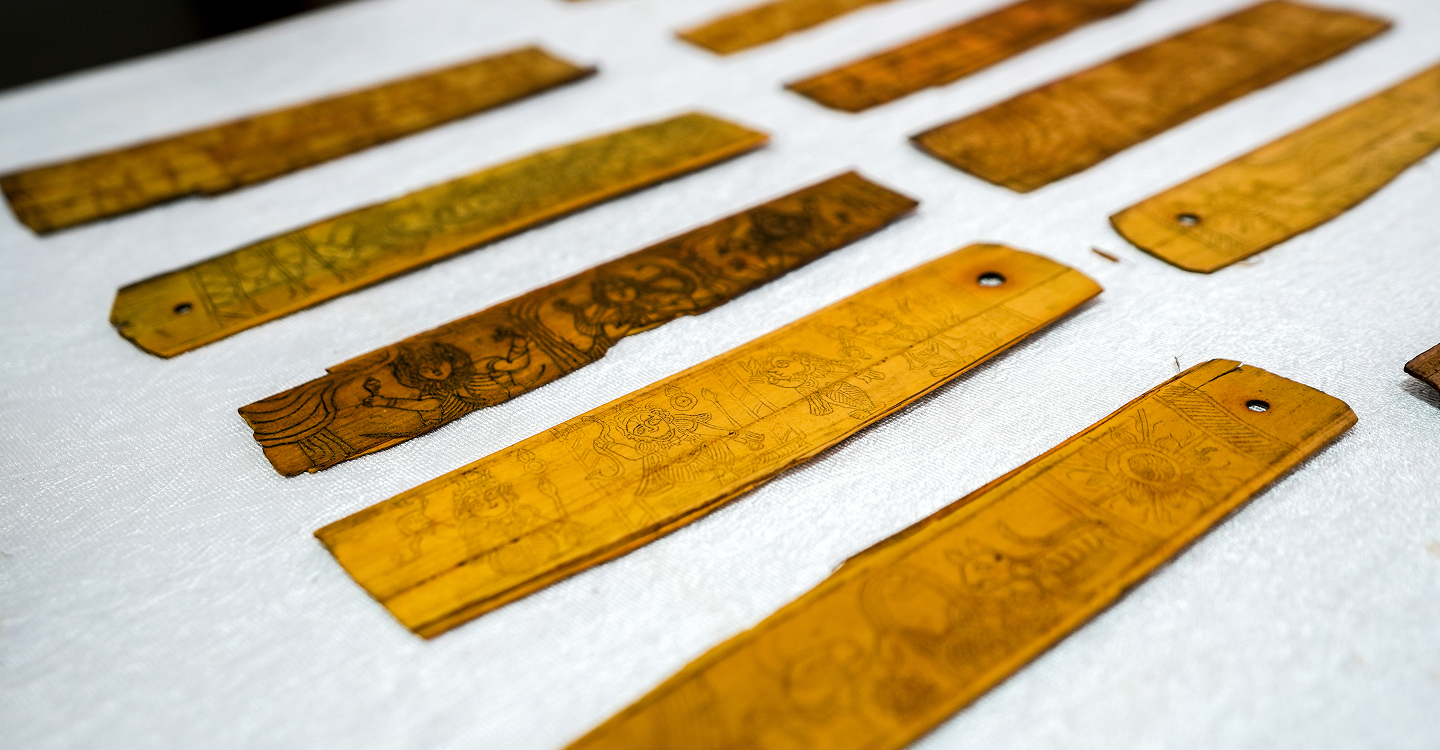
The Ph.D. in Indic Studies at Alliance University is a research-intensive doctoral programme designed to advance rigorous scholarship rooted in India’s civilizational knowledge traditions and their contemporary relevance. Positioned at the intersection of philosophy, language, culture, science, arts, and society, the programme uniquely integrates classical wisdom with modern research methodologies. It empowers doctoral scholars to move beyond conventional disciplinary boundaries and generate original insights that reinterpret, preserve, and revitalize indigenous knowledge systems for present and future contexts.
Through structured mentorship, critical study of primary texts, engagement with living traditions, and interdisciplinary inquiry, scholars translate textual, oral, and community-based knowledge into impactful academic, cultural, and policy contributions. By fostering dialogue between traditional epistemologies and global scholarship, the programme nurtures reflective researchers and thought leaders who combine intellectual rigor with cultural responsibility, contributing meaningfully to sustainable development, knowledge equity, and societal transformation
The Public Policy program is designed to give scholar a strong understanding of public policy theories, concepts to widen perspectives to take a successful career in public policy making. The course will enable students to apply science based subject with apply social science methods to strengthen their skills in socio-scientific modelling and policy analysis through a structured integration. Through this approach, students will be able to policy friction points in the interplay of stakeholders to particularly include politics, community business and government while at the same time demonstrate strong ethical principles and values in the understanding of human subjects to ensure inclusive, equitable and sustainable policy making to solve complex real-world problems with particular reference to Sustainable Development and climate change.

Why Choose
Ph. D. - Indian Knowledge System
at Alliance University?
Ph. D. - Indian Knowledge System
at Alliance University?
Lorem Ipsum is simply dummy
Civilizational Scholarship
Advanced inquiry into the intellectual and cultural heritage of India.
Specialized Domain Expertise
Specialized research in areas like Numismatics, Temple Architecture, and Yoga & Mental Health.
Ivy League Mentorship
Direct guidance from globally recognized faculty and top-tier scientists.
Technical Research Support
High-end instrumentation at AU-STIC for material and scientific analysis.
Global Academic Mobility
Financial support for international conferences and cross-institutional research.
‹ PREV
NEXT ›
Areas of Research
Comparative and Interdisciplinary Indic Studies.
Indian Science, Technology, Agriculture and Mathematics
Indian Linguistics and Philology
Performing Art and Folk Traditions
Regional and Indigenous Knowledge Systems
Indian History and Historiography
Indian Philosophy
Sanskrit and Classical Language studies
Indian Art, Architecture and Aesthetics
Vedic & Post-Vedic Studies
Ithihasa-Purana & Epic Studies
Bhakthi, Tantra and Religious Movements
Ayurveda and Yogic Science
PEO (Program Educational Objectives)
PSO (Program Specific Outcomes)
PO (Program Outcomes)
Activity Points
• Applicants holding a master’s degree with a minimum 55% marks or equivalent Grade in a point scale as may be prescribed by the UGC from time to time, wherever the grading system is followed.
• Applicants whose results of the final examination of a program leading to a master’s degree are awaited can be given provisional admission if he/she fulfils other requirements for admission. After the provisional admission, the candidate will be required to furnish proof of completing a master’s degree with a minimum of 55% marks within three months from admission, failing which his / her admission will be cancelled.
• Applicants holding foreign Degree’s equivalent to that of a Master’s degree study with minimum 55% marks or equivalent Grade in a point scale as may be prescribed by the UGC from time to time, wherever grading system is followed; Provided that applicants with a foreign Degrees shall be admitted to the Ph.D. programme, subject to clearance by the Equivalence Committee of Alliance University.
• Applicants having completed M.Phil. Coursework with a minimum 55% marks in aggregate or its equivalent Grade, in the UGC point scale, and those candidates who have their M.Phil. Dissertation evaluated, but viva-voce is pending, maybe may also be admitted to the Ph.D. programme.
• Applicants possessing a degree approved as equivalent to the M.Phil. Degree in India, obtained from a foreign Educational Institution accredited by the UGC, if candidates with a degree from a foreign Institution shall be admitted to the Ph.D. programme, subject to the clearance by the Equivalence Committee of Alliance University.
• Admission of candidates belonging to the SC/ST/OBC, or other reserved categories shall be governed by the Karnataka State Rules in this regard, from time to time.
• Students from a four-year undergraduate programme (with Honors) can enroll directly if they have scored 75% or above, with a 5% relaxation for specified categories as per UGC regulations. Those who have scored between 55% and 75% may qualify after completing either a one-year mastes programme or a bridging course of 36-40 credits. (Refer to National Credit Framework NCrF 2024).
• For students from a three-year undergraduate programme, Ph.D. eligibility requires the completion of a bridging programme of 36-40 credits along with the necessary coursework. (Refer to National Credit Framework NCrF 2024).
Program duration
| Entry Level | Program Duration |
|---|---|
| Entry Level | 3 – 6 Years (Full-Time) |
ACCEPTED TEST SCORES
| Particulars | Indian Nationals | Foreign Nationals |
|---|---|---|
| Registration Fee | ₹50,000 | $600 |
| program Fee (Per Annum) | ₹1,00,000 | $1,400 |
| Comprehensive Exam Fee | ₹20,000 | |
| Thesis Submission Fee | ₹30,000 | |
| Doctoral Scroll Free | ₹5,000 | |
| Convocation Fee | ₹3,000 | |
| Alumni Association Fee | ₹3,000 |
| Category | Eligibility / Scope | Grant Amount / Benefits |
|---|---|---|
| Research Fellowship | Full-time scholars | ₹35,000 per month |
| Contingency Grant | Full-time scholars | ₹25,000 per year |
| International Conference Funding | Case-by-case basis; once during the program | Up to ₹1,00,000 |
| National Workshop Funding | Scholars not receiving other funding support | ₹30,000 per year |
| Inclusion & Special Provisions | Women scholars and differently-abled scholars | Special provisions and relaxations; access to Centres of Excellence and entrepreneurial fund of ₹10 Crores |
| Policy | Conditions | Awards and funding are subject to review by the Scholarship / Research Committee; limited availability on a first-come-first-served basis |
Educational Loan Assistance
Explore scholarships, financial aid options, and loan assistance programs that help make quality education accessible, affordable, and achievable for students from diverse backgrounds.
| Steps | Description |
|---|---|
| Step 1 | Submit online application |
| Step 2 | Pay Application Fee — ₹3,000 |
| Step 3 | Alliance Research Aptitude Test (ARAT) |
| Step 4 | Personal Interview |
| Step 5 | Evaluation of research synopsis on proposed dissertation |
| Step 6 | Consideration of scholastic record, work experience, and extracurricular achievements; final selection based on overall performance |
Living Spaces That Inspire Belonging
EXPLORE OUR HOSTELS
Comfort, safety, and community form the foundation of campus living. Our residential halls are thoughtfully designed to create a sense of belonging—offering a welcoming environment where students can study, unwind, and build lifelong friendships.

Separate hostels
for boys and girls
Student-friendly
common areas
Spacious rooms
(single, double, or triple occupancy)
Dedicated wardens
and support teams

Real Stories, Real Impact
STUDENT
No testimonials found.
Everything You Need to Know
What are the eligibility criteria for pursuing a Ph. D. in Indian Knowledge System?
Applicants should hold a postgraduate degree with at least 55 percent marks from a recognised university. Graduates of four-year undergraduate (Honours) programs with 75% or above may apply directly. For further details, refer to the eligibility criteria in the
Admissions Process Page.
What is the duration of the Ph. D. in Indian Knowledge System at Alliance University?
The Ph. D. in Indian Knowledge System program can last for a minimum duration of 3 years to a maximum duration of 6 years.
What are the key areas of research covered under Indic Studies?
The key research areas in a Ph. D. in Indian Knowledge System include Vedic philosophy, Sanskrit linguistics, cultural preservation, and academic research.
Is knowledge of Sanskrit or classical Indian languages necessary for the program?
Knowledge of Sanskrit or other classical Indian languages is not mandatory for admission to the program. However, familiarity with these languages can be beneficial for scholars whose research involves primary classical texts.
How does the program integrate traditional Indic knowledge with modern research approaches?
By integrating emerging themes and examining India\'s traditional knowledge systems through rigorous, interdisciplinary research frameworks, the program encourages scholars to critically engage with classical texts, cultural practices, philosophies, and indigenous sciences, while exploring their relevance to contemporary academic, social, and ethical challenges.
Does Alliance University provide access to manuscripts, archives, or digital libraries for research?
Yes, the University provides access to research resources, libraries, and digital library access.
Are interdisciplinary research opportunities available with other fields such as political science, philosophy, or economics?
Yes, the program is interdisciplinary, covering subjects like Vedic philosophy, Sanskrit linguistics, and cultural preservation.
What funding or scholarships are available for Ph. D. scholars in Indic Studies?
Full-time scholars receive a research fellowship of INR 35,000 per month and a contingency grant of INR 25,000 per year.
What career opportunities are available after completing a Ph.D. in Indic Studies?
Graduates are equipped for careers in academic research, cultural preservation, and a range of scholarly and research-oriented roles.
How does Alliance University\'s Ph. D. in Indian Knowledge System prepare scholars for roles in cultural preservation or academic research?
Through rigorous interdisciplinary research and critical engagement with classical texts, cultural practices, philosophies, and indigenous knowledge systems, the program equips scholars with the skills to contribute meaningfully to academic research and cultural preservation.
Why is Ph. D. in Indian Knowledge System at Alliance University a top choice for scholars exploring India\'s ancient wisdom in 2026?
The program is dedicated to exploring India\'s ancient wisdom through rigorous scholarship and transformative inquiry, aimed at addressing contemporary challenges. The program is widely recognised and actively sought after in India, making it a leading choice for scholars on an academic and intellectual exploration journey.
What is the Ph.D. in Indic Studies program?
An interdisciplinary doctoral program exploring Indian civilization, knowledge systems, arts, literature, philosophy, science, and culture.
What research areas are available?
Epigraphy, Manuscriptology, Numismatics, South Asian Art Forms, Indian Mathematics & Astronomy, Folklore, Vedic Culture, Indian Medicine, Temple Architecture, Yoga & Mental Health, Sculpture & Iconography
What is the eligibility requirement?
Master’s degree with ?55% marks; additional pathways available under UGC and NCrF 2024 norms.
What is the program duration?
Typically 3–6 years, depending on research progress.
What financial assistance is available?
Fellowships, contingency grants, and support for national and international academic engagements.
How are candidates selected?
Through application review, research proposal assessment, and personal interview.
What facilities are available?
AU-STIC central instrumentation facility, research databases, and Centres of Excellence.
Can international degree holders apply?
Yes, subject to equivalence clearance.
Are category-based relaxations available?
Yes, in accordance with statutory guidelines.
Can scholars transfer from other institutions?
Yes, upon approval.
What coursework is included?
Research Methodology, Cultural & Philosophical Studies, Textual Analysis, Academic Writing, and Interdisciplinary Research Practicum.
Course Framework
Program Outcomes
- Interdisciplinary Research Proficiency: Demonstrate advanced understanding and integration of philosophy, language, culture, science, and arts within Indic knowledge traditions to address complex intellectual and societal questions.
- Knowledge Innovation and Societal Relevance: Conceptualize and produce original research that reinterprets classical wisdom and applies Indic knowledge frameworks to contemporary social, environmental, and cultural challenges.
- Textual Scholarship and Knowledge Creation: Develop the capability to critically analyze, interpret, translate, and document primary sources, generating new insights and original scholarly contributions.
- Field Immersion and Contextual Intelligence: Engage in field-based, community-centered, and archival research to understand living traditions and knowledge practices within their socio-cultural and historical contexts.
- Ethical and Responsible Knowledge Practice: Uphold academic integrity and cultural responsibility while ensuring authenticity, proper attribution, and respectful engagement with traditional knowledge holders and communities.
- Scholarly Communication and Dissemination: Communicate research findings effectively through publications, translations, lectures, policy briefs, and public discourse for academic, institutional, and community audiences.
- Research-to-Impact Translation: Demonstrate the ability to translate knowledge into meaningful outcomes such as education, preservation initiatives, policy recommendations, and sustainable cultural development.
- Civilizational and Systems Thinking: Understand and critically engage with broader civilizational, ecological, and policy frameworks to situate Indic knowledge within national and global conversations.
- Collaboration and Co-creation: Work effectively with scholars, practitioners, institutions, and communities to co-create interdisciplinary and socially relevant knowledge initiatives.
- Lifelong Learning and Thought Leadership: Continuously expand intellectual horizons, engage critically with emerging scholarship, and contribute as educators, researchers, and thought leaders in advancing Indian knowledge systems.
Program / Research Highlights
- Extensive one-year coursework including Research Methodology, Academic Writing, Research Ethics, and foundations of Indic epistemologies
- Specialized electives in Indian philosophy, aesthetics, language traditions, and classical knowledge systems to strengthen theoretical, textual, and cultural understanding
- Text-based, field-based, and interdisciplinary research pathways enabling critical study of primary sources, translations, documentation, and community-engaged scholarship as recognized doctoral research outputs
- Dual supervision model with domain and interdisciplinary mentors to integrate classical scholarship with contemporary research frameworks
- Interdisciplinary engagement across philosophy, literature, performing arts, social sciences, history, and scientific traditions to foster holistic and cross-disciplinary inquiry
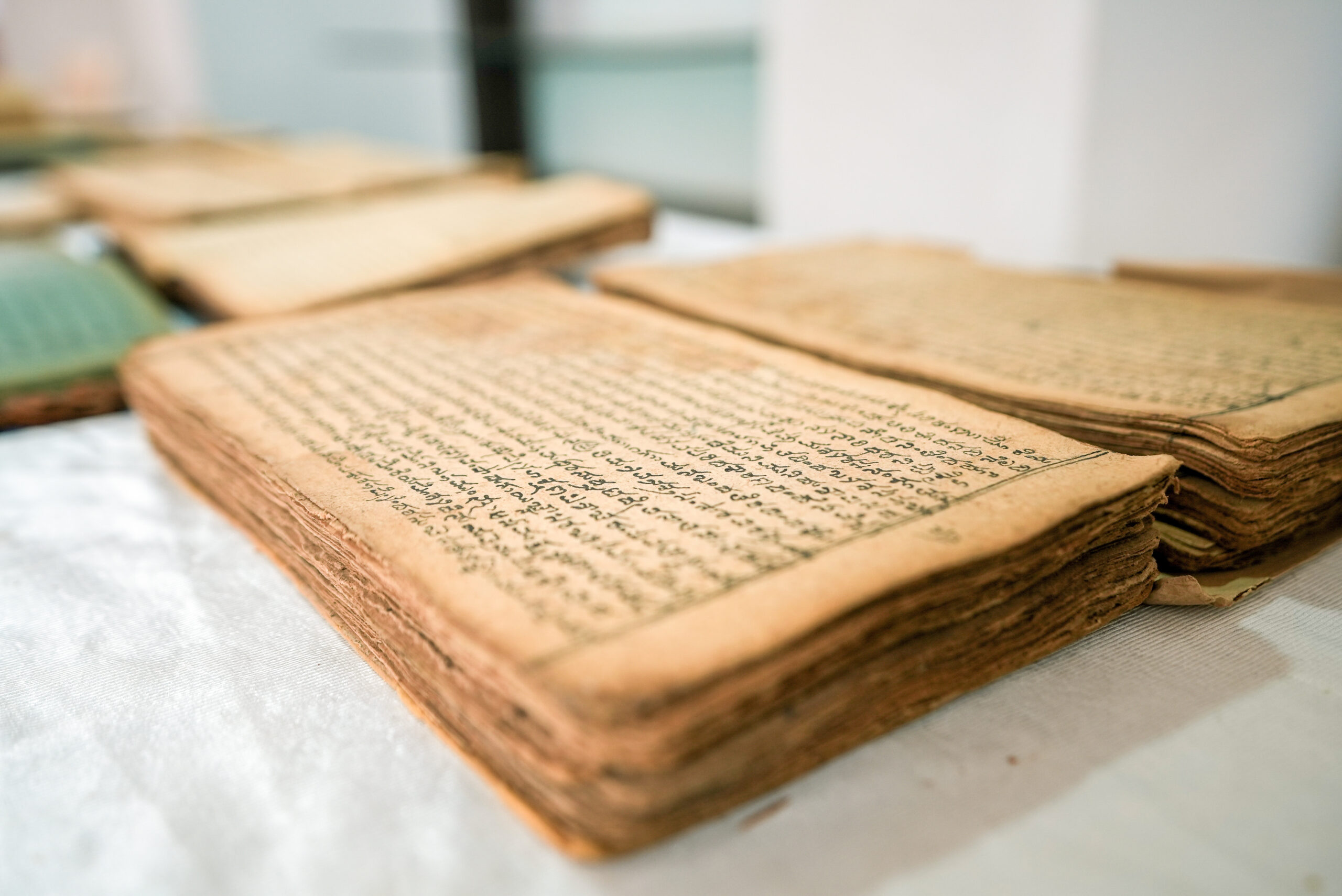
- Field immersion, manuscript studies, archival research, and engagement with traditional knowledge communities supporting preservation, interpretation, and revitalization of indigenous knowledge
- Access to libraries, manuscript repositories, digital archives, and research centers for textual analysis, documentation, and dissemination
- Opportunities for presentations at conferences, seminars, publications in peer-reviewed journals, and academic collaborations to enhance scholarly visibility
- Monthly fellowship of ₹35,000 plus applicable benefits for full-time scholars with Seed Fund and Incubation Support
- Ph.D. awarded based on successful completion of coursework, qualifying examination, and submission and defense of original scholarly or interdisciplinary doctoral research
Areas of Research
- Comparative and Interdisciplinary Indic Studies
- Indian Science, Technology, Agriculture and Mathematics
- Indian Linguistics and Philology
- Performing Art and Folk Traditions
- Regional and Indigenous Knowledge Systems
- Indian History and Historiography
- Indian Philosophy
- Sanskrit and Classical Language Studies
- Indian Art, Architecture and Aesthetics
- Vedic & Post-Vedic Studies
- Ithihasa-Purana & Epic Studies
- Bhakthi, Tantra and Religious Movements
- Ayurveda and Yogic Science
Academic Structure of Research
- Multi-disciplinary and knowledge-based research culminating in individual doctoral outcomes
- Scholars are encouraged to undertake interdisciplinary research across philosophy, language, literature, aesthetics, history, science, and cultural studies through collaborative and cross-domain inquiry. With the approval of the Doctoral Research Committee (DRC), shared thematic or collaborative research projects may translate into distinct and original theses for each scholar, enabling separate doctoral degrees based on individual contributions and specialized areas of investigation
- Dual supervision and interdisciplinary mentorship framework
- Each candidate will work under dual supervision—a primary research supervisor and a co-supervisor from complementary or allied disciplines—to integrate classical scholarship with contemporary academic perspectives. This structure supports cross-disciplinary engagement (e.g., Philosophy and Performing Arts, Sanskrit and Linguistics, Ayurveda and Life Sciences, Culture and Social Sciences), ensuring both methodological rigor and holistic understanding
- Structured doctoral progression and award criteria
- The Ph.D. award at Alliance University is based on the successful completion of programme requirements, including coursework, comprehensive/qualifying examination, and original scholarly research. Doctoral outcomes may include critical textual analysis, translations, field documentation, archival studies, or interdisciplinary theses that demonstrate significant and original contributions to Indic knowledge traditions and their contemporary relevance