Alliance University Hosts Panel Discussion on the Emerging Global South and the Changing Multipolar World
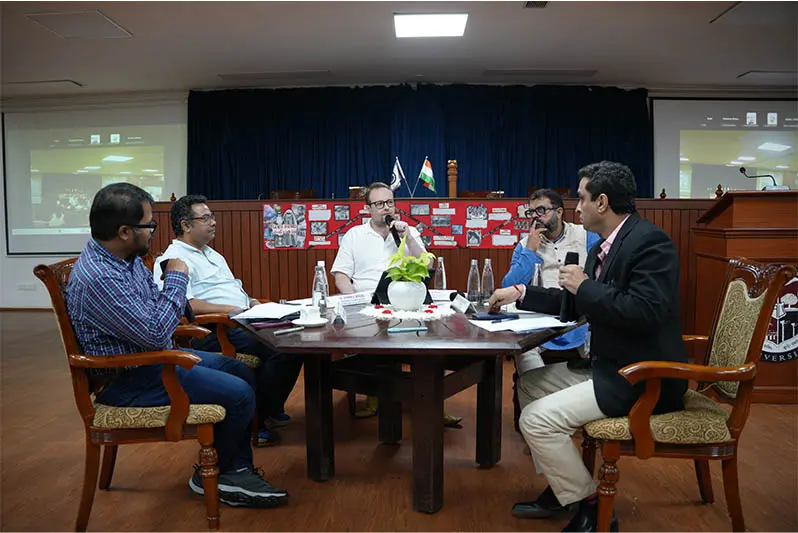
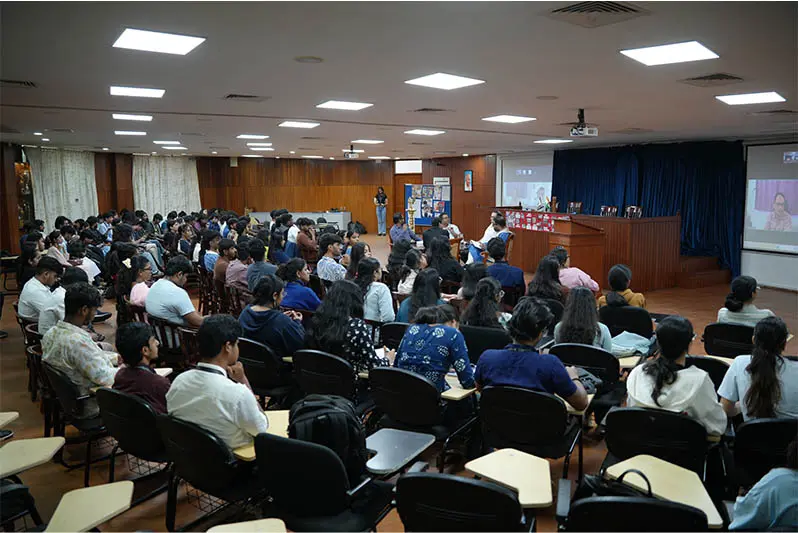
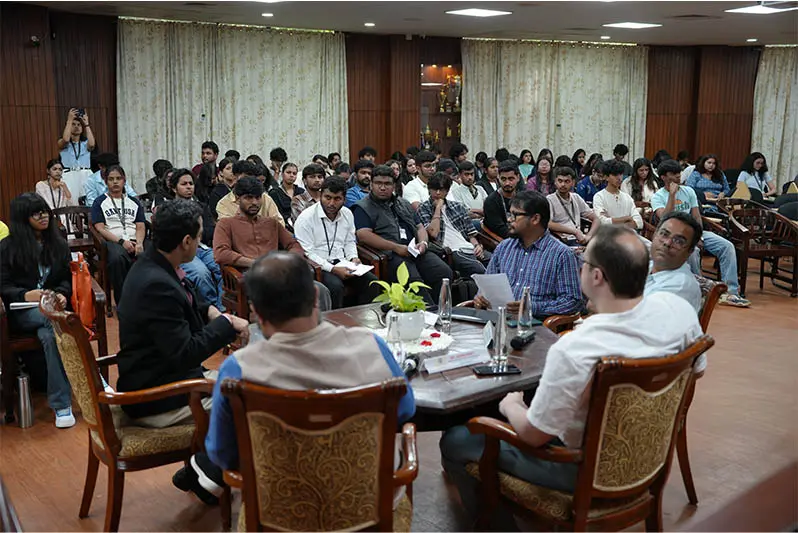
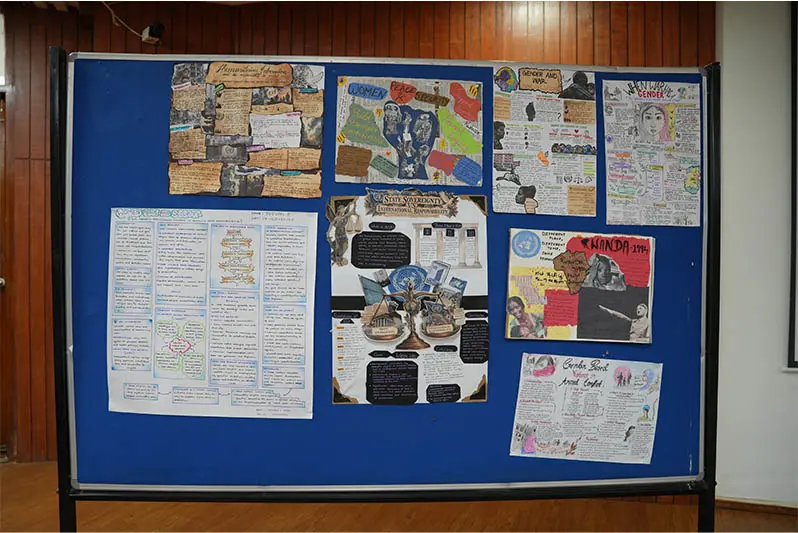
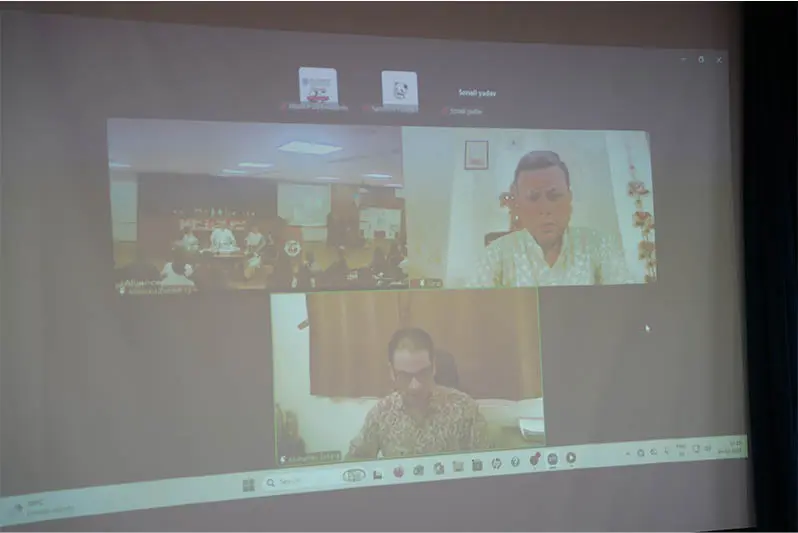
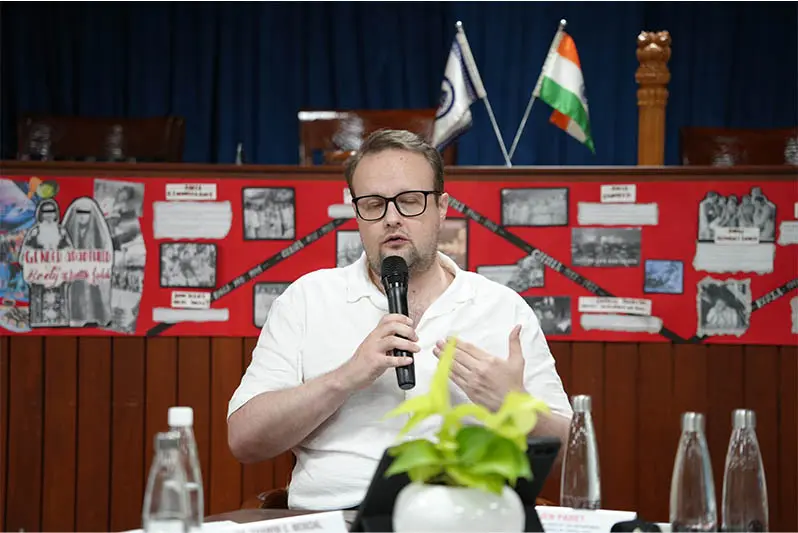
Alliance University, through the Alliance Centre for Global Affairs and International Relations (ACGAIR), organised a panel discussion titled “From the War on Terror to the Emerging Global South: Fractured Hemispheres, Migration and the Reordering of the Multipolar World.” The discussion brought together academicians and experts in international relations, political science and economics to examine contemporary geopolitical developments, global conflicts and the evolving role of the Global South in international affairs.
The session featured Dr. Anshuman Behera, Assistant Professor, Department of Political Science, University of Hyderabad; Dr. Kunal Kishore, Assistant Professor, Institute of Law, Nirma University; Dr. Shamim Mondal, Professor and Head, Department of Economics, Alliance University; Dr. Debdulal Thakur, Professor, Department of Economics, Alliance University; and Dr. Julien Paret, Assistant Professor and Head, Department of Political Science, Alliance University. The discussion was moderated by Dr. Rajat Banerjee and Dr. Shilajit Sengupta, faculty coordinators of ACGAIR.
The event commenced with a traditional Saraswati Vandana and lamp-lighting ceremony, followed by introductory remarks that established the context for discussions on shifting global power structures, international security and emerging geopolitical challenges.
Dr. Anshuman Behera examined ongoing global conflicts, the growing significance of the Global South and India\'s position within evolving international alliances. His discussion highlighted the challenges faced by India in navigating geopolitical uncertainties and the policy approaches adopted in response to changing international dynamics.
Dr. Shamim Mondal provided a historical perspective on the relationship between economic developments and geopolitical transformations. Drawing on global economic history and China\'s economic growth, he explored the interconnected nature of international relations, economic strategies, international law and the contemporary geopolitical position of the Global South.
Dr. Julien Paret discussed Eurasian geopolitical dynamics, focusing on the economic and security implications of ongoing conflicts, the changing influence of international blocs and the emergence of potential regional powers. He also examined India\'s strategic position, diplomatic relationships and the challenges associated with navigating an increasingly complex international environment.
Dr. Debdulal Thakur addressed the economic dimensions of contemporary geopolitical developments, highlighting India\'s opportunities and internal governance challenges. His observations also explored the functioning of war economies and their wider economic consequences.
Dr. Kunal Kishore examined the evolution of international policies and treaties in the context of global conflicts. He discussed the importance of diplomatic engagement and strategic decision-making in enabling India to navigate international challenges while safeguarding its national interests.
The panel discussion was followed by an interactive question-and-answer session, during which students engaged with the speakers on international security, geopolitical developments, economic policy and India\'s role in the emerging multipolar world. The interaction encouraged critical thinking and provided participants with an opportunity to explore complex global issues from multiple academic perspectives.
The session concluded with a summary of the discussions and a vote of thanks delivered by Dr. Abhinav Kumar, who reflected on the key insights shared by the panellists. A group photograph featuring the panellists and ACGAIR members marked the conclusion of the event.
Through this initiative, Alliance University reinforced its commitment to fostering informed academic dialogue and interdisciplinary engagement on contemporary global challenges. The discussion provided students with valuable perspectives on international relations, economic interdependence and the changing global order, encouraging a deeper understanding of the forces shaping the future of international diplomacy.